
Introduction
If you’ve spent any time reading about business technology lately, you’ve probably run into the phrase “enterprise tech innovation” more times than you can count. It shows up in headlines, vendor pitches, and LinkedIn posts — usually without a clear explanation of what it actually means.
That’s a problem. Because when a term gets used everywhere but explained nowhere, it starts to feel like empty marketing language instead of something you can actually act on.
This guide is different. We’re going to break down what enterprise tech innovation really means, what “Droven.io” refers to in this context, and — more importantly — give you a practical way to think about it. Whether you’re an IT leader trying to modernize your systems, a business decision-maker evaluating new tools, or someone switching careers into tech, you’ll walk away with a clear framework instead of more buzzwords.
No hype. Just a straight explanation and a checklist you can actually use.
What Enterprise Tech Innovation Actually Means
Let’s start simple. Enterprise tech innovation is the ongoing use of technology — cloud computing, AI, automation, data, and cybersecurity — to help a business run better, compete harder, and adapt faster.
That’s it. It’s not a single product. It’s not a magic formula. It’s a way of describing how modern companies use technology as a strategic advantage instead of just a support function.
Here’s the part most articles skip: it’s a continuous process, not a one-time project. A lot of businesses used to think of “going digital” as something with a start date and an end date — you buy new software, roll it out, and you’re done. That mindset doesn’t hold up anymore. Technology changes too fast, and customer expectations shift right along with it. Companies that treat innovation as an ongoing habit tend to outperform the ones that treat it as a checkbox.
Now, about the “Droven.io” part specifically. If you’ve searched this term, you’ve probably noticed that solid, verifiable information about Droven.io as a distinct brand is limited. Based on what’s publicly visible, it appears to function more as a technology content platform — covering topics like AI, IT, digital transformation, and the future of work — rather than a single enterprise software product you can buy and install.
We think it’s worth being upfront about that distinction. A lot of content online blurs the line between “here’s a real product with real features” and “here’s a general industry concept.” We’d rather you know exactly what you’re dealing with than read a vague pitch dressed up as a definition.
Innovation vs. Transformation — Why the Words Aren’t Interchangeable
People often use “digital transformation” and “tech innovation” like they mean the same thing. They don’t, and the difference actually matters for how you plan.
Digital transformation usually refers to a defined project — migrating to the cloud, replacing an old system, rolling out a new platform. It has a beginning and an end.
Tech innovation is the ongoing capability that comes after that. It’s the habit of continuously improving, testing new tools, and adjusting your tech stack as your business needs change.
Think of transformation as renovating a house, and innovation as the ongoing maintenance and upgrades you do to keep it in good shape for years. You need both, but they’re not the same job.
The Core Pillars of Enterprise Tech Innovation
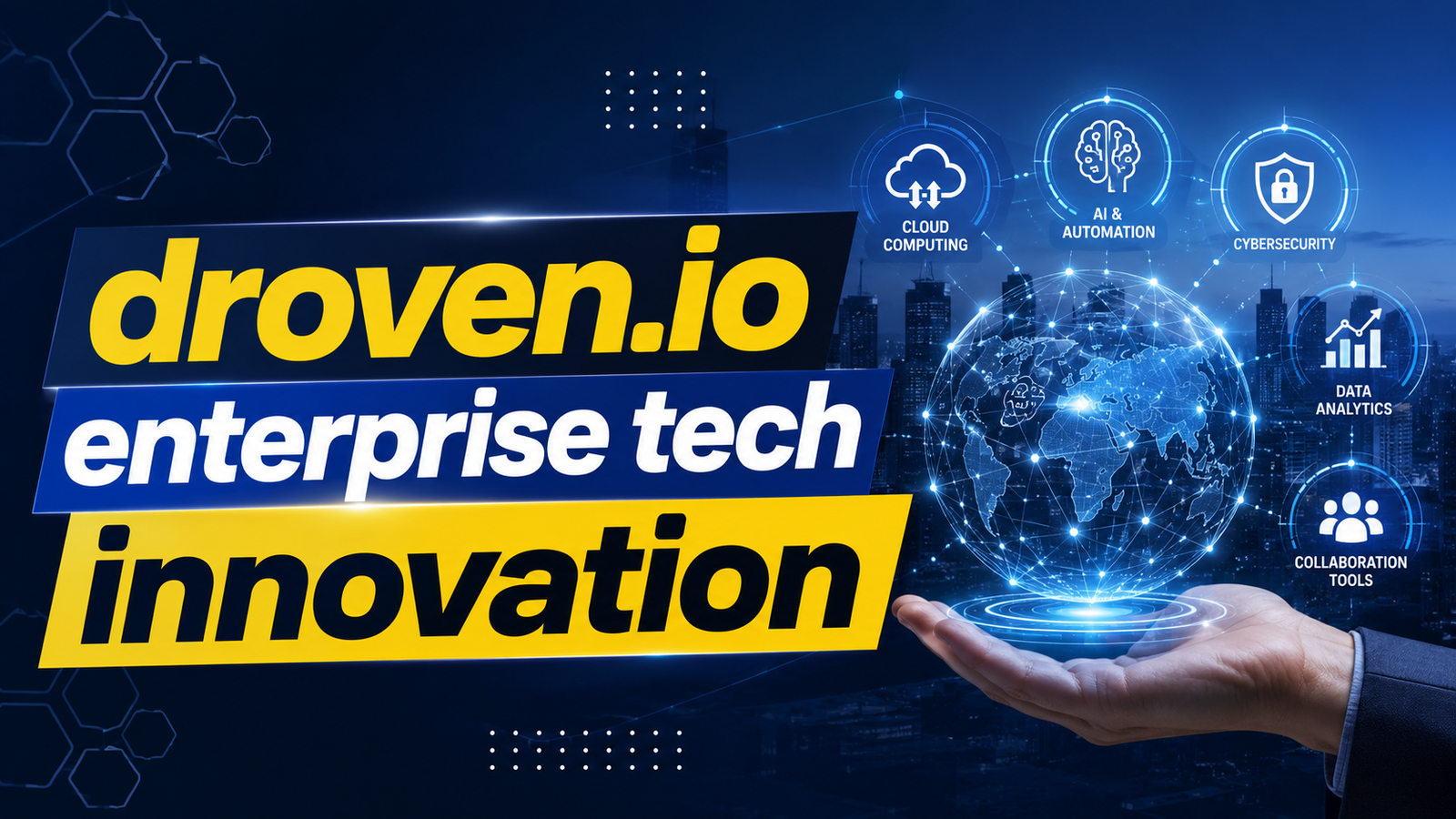
If you strip away the buzzwords, enterprise tech innovation really comes down to five areas working together. Understanding each one — and how they connect — gives you a much clearer picture than any generic “top trends” list.
Cloud Computing and Hybrid Infrastructure
Cloud computing lets businesses scale up or down without owning a room full of servers. That’s the simple pitch, and it’s a real benefit. But here’s the practical reality: most mid-sized companies don’t go fully cloud-native. They run a hybrid setup — some systems in the cloud, some still on-premises.
Why? Usually it comes down to two things: compliance requirements that make certain data harder to move, and legacy systems that still work fine and aren’t worth the cost or risk of migrating right now. If you’re evaluating your own cloud strategy, don’t assume “more cloud” automatically means “better.” Sometimes hybrid is the smarter, more realistic choice.
AI, Machine Learning, and Automation
This is probably the pillar getting the most attention right now, and for good reason. But it’s worth separating two things that often get lumped together:
- Basic automation (like RPA — robotic process automation) handles repetitive, rule-based tasks. Think data entry, invoice processing, or routing support tickets.
- AI-driven automation goes further. It can spot patterns, make predictions, and handle tasks that involve some judgment — like flagging potential fraud, forecasting demand, or catching quality issues in a production line.
In practice, most companies use AI in a handful of specific, high-value spots — not everywhere at once. Customer support chatbots, fraud detection systems, and demand forecasting tools are common starting points because the ROI is easy to measure.
Data Analytics and Business Intelligence
Data on its own isn’t useful. What matters is turning it into decisions. That’s what business intelligence tools and predictive analytics are for — they take raw numbers and turn them into dashboards and forecasts that actual humans can use to make calls.
A good way to think about this pillar: if your team is still making major decisions based on gut feeling or outdated spreadsheets, this is probably your highest-impact starting point.
Cybersecurity and Regulatory Compliance
This isn’t optional anymore — it’s the baseline. As companies move more operations online, they also become bigger targets. That’s why concepts like zero trust security (where no user or device is automatically trusted, even inside the network) have become standard practice rather than a nice-to-have.
Compliance matters just as much. Depending on your industry, you might be dealing with data privacy laws, financial regulations, or industry-specific security standards. Skipping this pillar to move faster on other fronts is one of the most common — and costly — mistakes companies make.
Collaboration and Remote/Hybrid Work Tools
The last pillar is easy to overlook because it feels less “technical,” but it matters just as much as the others. As more teams work remotely or in hybrid setups, the tools that support communication, project tracking, and workforce management become part of your innovation strategy too — not just an HR concern.
Here’s a concrete example: a company that modernizes its cloud infrastructure and AI tools but still runs internal communication through scattered emails and disconnected spreadsheets will feel the gap fast. Teams end up with better systems but worse coordination. Video conferencing, shared project boards, and unified communication tools aren’t flashy, but they’re often what determines whether all the other pillars actually work together in practice — or just sit in separate silos doing their own thing.
How Companies Really Modernize (Not the Idealized Version)
Most articles on this topic describe modernization like it’s a clean, linear process: assess, plan, implement, done. In reality, it rarely works that way.
Most companies modernize department by department, usually starting wherever the pain is worst. A retail company might automate its customer service first because that’s where complaints are piling up. A manufacturing company might prioritize quality inspection because errors there are the most expensive.
Here’s a simple example: imagine a mid-sized company with an outdated customer service system and an equally outdated backend inventory system. Both need work. But the company decides to fix customer service first — not because it’s more “important” in some abstract sense, but because the ROI shows up faster and it’s easier to prove the investment was worth it. That success then builds the case (and the budget) for tackling the backend system next.
This is normal. It’s not a failure to modernize everything at once — it’s usually the smarter approach.
Legacy systems are almost always the biggest blocker here. And despite what some vendors will tell you, “rip and replace” isn’t always the right call. Sometimes an old system still does its job reliably, and the smarter move is to build around it rather than replace it outright — at least until there’s a clear, justified reason to migrate.
Common Mistakes to Avoid
A few patterns show up again and again in companies that struggle with tech innovation:
- Tool sprawl. Buying multiple platforms that overlap in function, creating confusion and wasted spend instead of efficiency.
- Skipping change management. Rolling out new tools without getting buy-in from the people who actually have to use them. Even the best software fails if your team doesn’t adopt it.
- Chasing hype before solving the real problem. Investing in flashy new technology before addressing a basic operational issue that a simpler fix could solve.
If you only take one thing from this section, let it be this: innovation that ignores the people using the tools isn’t really innovation — it’s just spending.
How to Evaluate an Enterprise Tech Tool or Platform
Knowing the common mistakes is only half the battle — the other half is having a repeatable way to size up a tool before you commit budget to it. This is the part decision-makers actually need: a way to cut through vendor pitches and figure out if a tool is worth the investment. Here’s a practical checklist you can use before signing any contract.
Ask these questions:
- Does it integrate with what you already have, or does it create another silo? A tool that doesn’t talk to your existing systems often creates more work than it saves.
- Is the ROI measurable within 6–12 months? If a vendor can’t give you a reasonably clear picture of expected returns in that window, be cautious. Tie this to specific KPIs upfront — cost saved, time saved, or errors reduced — rather than vague “efficiency gains.”
- Does it scale with your growth, or will you outgrow it and need to re-platform later? Ask directly about limits — user counts, data volume, transaction limits. This matters whether you’re looking at a SaaS subscription, a PaaS setup, or a low-code platform your own team will build on.
- What’s the security and compliance posture? Does it meet the standards your industry requires? Ask for specifics, not just reassurances — this should be part of your broader risk management process, not an afterthought.
- What’s the real total cost? Licensing fees are just the start. Factor in implementation time, staff training, vendor management overhead, and ongoing support costs.
Red Flags When Evaluating Vendors
Watch out for these warning signs during the sales process:
- Vague or overly optimistic ROI claims with no supporting data
- No clear implementation timeline, or a timeline that keeps shifting
- Heavy lock-in with no reasonable exit plan if the tool doesn’t work out
- Pressure to sign quickly without time to run a pilot or trial
A good vendor will welcome these questions. If a vendor gets defensive or vague when you ask for specifics, that alone tells you something.
Where the Field Is Really Heading (Signal vs. Noise)
Once you have a solid way to evaluate individual tools, the next question is where to point your attention in the first place. Not every “emerging technology” headline deserves your budget. Here’s a clear-eyed breakdown of what’s gaining real traction for most businesses versus what’s still mostly hype outside of niche use cases.
Gaining real traction:
- AI-driven automation, especially in customer service, forecasting, and fraud detection
- Edge computing, where data gets processed closer to where it’s generated (useful for things like IoT devices and real-time monitoring)
- Zero trust security, now considered standard practice rather than cutting-edge
- Low-code and no-code platforms, which let non-developers build simple tools and workflows without a full engineering team
Still mostly hype for typical enterprises:
- Quantum computing — genuinely important research, but not something most businesses need to plan around yet
- Blockchain technology — useful in specific niches (like certain supply chain or financial applications), but not a general-purpose solution most companies need
- Virtual reality for everyday business use — still mostly experimental outside of specific industries like training simulations
A good rule of thumb: if a technology is being pitched as solving every problem for every industry, that’s usually a sign to slow down and ask more questions.
For Career-Changers: Skills and Roles Worth Learning
If you’re not evaluating tools for a company but instead thinking about breaking into this field, here’s the practical version of this guide for you.
The areas seeing the most consistent demand right now:
- AI and automation literacy — you don’t need to build AI models from scratch, but understanding how AI tools work and where they fit into business processes is increasingly valuable across almost every role.
- Cloud fundamentals — even non-engineering roles benefit from understanding basic cloud concepts, since so much business infrastructure now runs there.
- Data analytics — the ability to read, interpret, and communicate insights from data is one of the most transferable skills across industries.
- Cybersecurity basics — you don’t need to become a security specialist, but a working understanding of security fundamentals makes you more valuable in almost any tech-adjacent role.
Roles growing fastest in this space tend to include AI/automation specialists, cloud administrators, data analysts, and cybersecurity analysts — but plenty of “translator” roles are growing too, where the job is less about writing code and more about connecting technical teams with business needs.
If you’re starting from zero, here’s the simplest advice: pick one area — data analytics is often the most accessible starting point — and go deep before going wide. Trying to learn AI, cloud, security, and automation all at once usually leads to burnout instead of progress. Many learning management systems and online courses offer structured, beginner-friendly paths into any of these areas, so the barrier to starting is lower than it might feel.
Conclusion
Here’s the short version of everything above: enterprise tech innovation isn’t a single purchase, a single project, or a single buzzword-worthy concept. It’s an ongoing habit built on five connected pillars — cloud infrastructure, AI and automation, data analytics, cybersecurity, and collaboration tools — all working together to help a business adapt and compete.
If you’re a decision-maker, the practical takeaway is the evaluation checklist above. Use it before your next tool purchase, and you’ll avoid a lot of the common, expensive mistakes.
If you’re a career-changer, the takeaway is simpler still: pick one skill area, learn it well, and build from there.
And if you remember nothing else from this guide, remember this: you don’t need to overhaul everything at once. Start with your biggest pain point, prove the value, and build momentum from there. That’s how real, lasting tech innovation actually happens — not through hype, but through steady, deliberate progress.
6. FAQs
1. What is Droven.io enterprise tech innovation?
It describes how businesses use technologies such as AI, cloud computing, automation, data, and cybersecurity to modernize and stay competitive.
2. Is Droven.io a specific enterprise software product?
Based on the article’s available information, Droven.io appears to be a technology content platform rather than a single enterprise software product.
3. What are the main pillars of enterprise tech innovation?
The article identifies five core areas: cloud infrastructure, AI and automation, data analytics, cybersecurity, and collaboration tools.
4. How should businesses start modernizing their technology?
Start with the biggest operational problem, prove the value of the solution, and then expand gradually instead of changing everything at once.
5. What should businesses check before buying an enterprise technology tool?
Check integration, measurable ROI, scalability, security, compliance, implementation requirements, and the total cost of ownership.