
Introduction
If you spend any time in SEO or content marketing circles, you’ve probably come across UploadArticle.com in a list of “places to submit guest posts” or “sites for backlinks.” And if you’re like most people, your first question isn’t “how do I sign up?” It’s “is this actually worth my time?”
That’s a fair question. There are a lot of article submission sites out there, and not all of them are created equal. Some help you build real visibility and a few useful backlinks. Others are basically link farms that do more harm than good.
This guide walks you through what UploadArticle.com actually is, how the submission process works from start to finish, what kind of content tends to get approved, and what you can realistically expect in terms of SEO value. Whether you’re an SEO agency looking for another channel, a brand wanting more visibility, or a freelance writer trying to build a portfolio, you’ll walk away knowing exactly how to use this platform — and where it fits into your bigger content strategy.
What Is UploadArticle.com?
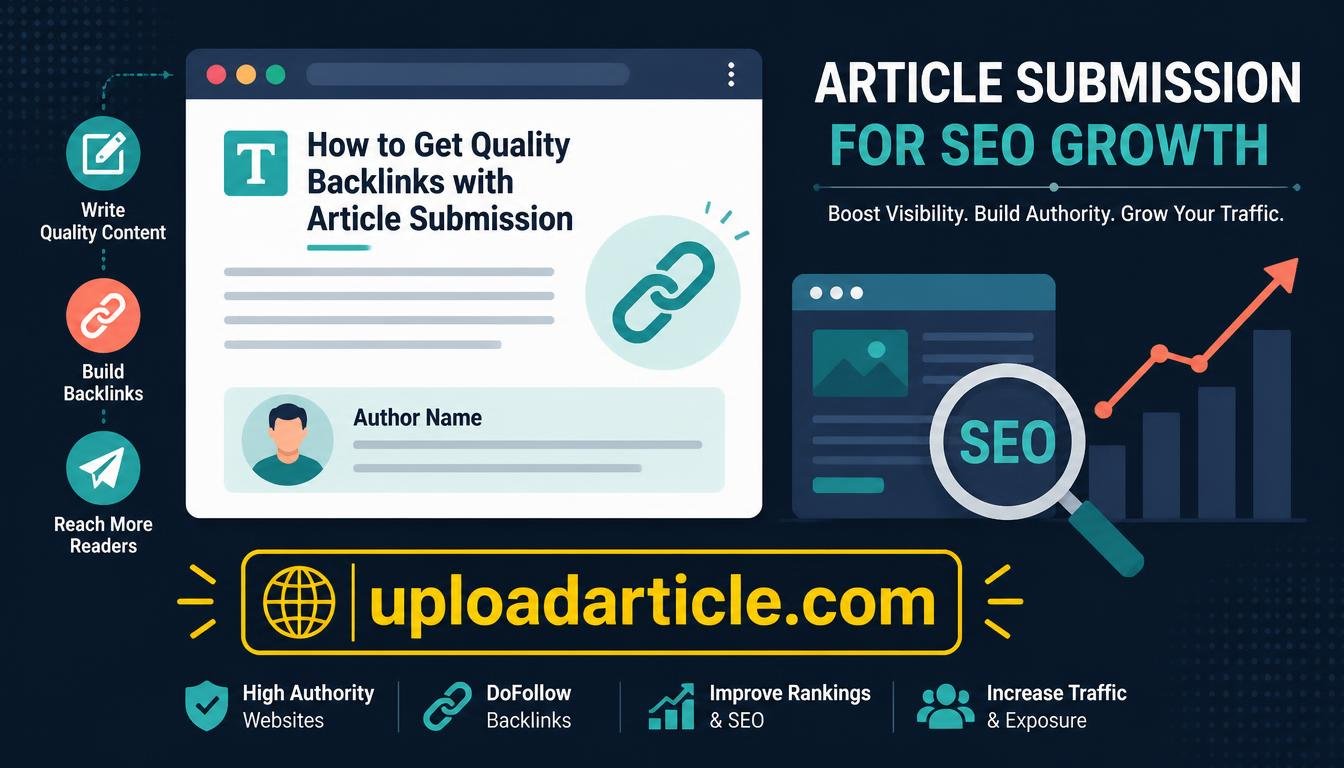
At its core, UploadArticle.com is an article publishing platform. People write content, submit it through the site, and — if it meets the editorial guidelines — it gets published for a wider audience to read. In return, contributors usually get an author byline, a link back to their own site, and exposure to readers they might not have reached otherwise.
It’s part of a broader category sometimes called guest posting platforms or article marketing sites. The idea isn’t new. Online publishing of this kind has been around for years, but the tools and expectations around it have gotten more sophisticated. Today’s platforms care more about quality, relevance, and reader value than the old “submit anything, get a link” model that used to dominate this space.
Who It’s Built For
UploadArticle.com tends to attract three main types of users:
- SEO agencies and content marketers looking for another channel to build backlinks and distribute client content
- Brands and business owners who want more visibility without running paid ads
- Freelance writers and independent authors trying to build an author platform, a portfolio, or simply get their name in front of more readers
If you fall into any of these groups, there’s a good chance this platform can add something useful to what you’re already doing — as long as you understand how it works and use it the right way.
A Quick Look at the Platform Features
Most article submission platforms like this one offer a mix of free and paid submission options, categorized content sections (business, tech, lifestyle, and so on), and some form of content distribution once your article goes live. Some also offer basic reporting, so you can see how your article is performing after it’s published.
The exact features can change over time, so it’s worth checking the current version of the site before you submit anything. But the general structure — submit, get reviewed, get published, get a link — stays pretty consistent across platforms like this.
How Article Submission Works, Step by Step
This is the part most people actually want to know: what does the process look like from the moment you decide to submit, to the moment your article goes live?
Setting Up and Preparing Your Article
Before you write a single word, it helps to have a plan. Start by creating your account and filling out your author bio properly — this is often the one place you get a guaranteed link back to your site, so don’t rush it. A short, clear bio with a relevant link works better than a vague one packed with keywords.
Next, pick your category carefully. If you write a business article but file it under lifestyle, it’s more likely to get rejected or buried. Take a minute to browse existing published articles in your chosen category so you know what “normal” looks like on this platform.
Formatting and Submission
Once you’re ready to submit, pay attention to the basics:
- Word count — aim for a solid, substantial article rather than something thin. Longer, well-structured pieces tend to perform better and get approved more easily.
- Images — include at least one relevant image if the platform allows it, and make sure you have the rights to use it.
- Link placement — most platforms allow one or two contextual links inside the body, plus your author bio link. Don’t try to stuff in more than that.
Here’s a simple example of how a submission timeline usually plays out:
- Day 1: You submit your article through the platform
- Day 3–5: An editor reviews it against the guidelines
- Day 5 onward: You either see it published, or you get feedback asking for changes
That timeline can vary depending on how busy the review team is, but it gives you a realistic expectation instead of assuming it’ll go live instantly.
Review and Approval Process
This step is where a lot of articles get stuck. Editors are usually checking for a few specific things: is the content original, does it read naturally, does it actually help the reader, and does it follow the formatting rules.
If your article gets rejected, don’t take it personally — read the feedback, make the changes, and resubmit. Most rejections come down to fixable issues like weak formatting, promotional language, or content that’s too thin to add real value.
Editorial Guidelines and Formatting Requirements
Every article submission platform has its own version of editorial guidelines, and UploadArticle.com is no different. Understanding these guidelines before you write saves you time and dramatically increases your odds of getting approved on the first try.
What “High-Quality” Actually Means Here
“High-quality content” gets thrown around a lot, but on a platform like this, it usually comes down to three things: the article is original (not copied or spun from another source), it goes deep enough to actually teach the reader something, and it reads like it was written by a person who understands the topic — not generic filler.
Original content doesn’t mean it has to be groundbreaking. It just means it shouldn’t feel like a rehash of the first five Google results on the topic.
Formatting Checklist
Before you hit submit, run through this quick checklist:
- Clear H2 and H3 headers that break the article into scannable sections
- Short paragraphs — three or four sentences at most
- No more than one or two contextual links in the body
- A natural, conversational tone instead of stiff, formal language
- No excessive keyword repetition
A Quick Before-and-After Example
Here’s what a common formatting mistake looks like, and how to fix it.
Before: “Businesses looking to improve business growth should focus on business strategies that improve business outcomes for their business.”
After: “Businesses that want steady growth need a clear strategy — one that actually improves outcomes, not just one that sounds good on paper.”
The second version says the same thing, but it reads like a person wrote it. That’s the bar most editors are checking for.
SEO Value: Backlinks, Domain Authority, and Organic Traffic
This is probably the section you care about most, so let’s be direct about it.
Do-Follow vs. No-Follow Links
Not every link from an article submission site passes the same SEO value. Some platforms use do-follow links, which pass link equity directly. Others use no-follow links, which don’t pass ranking value in the traditional sense but can still drive referral traffic and visibility.
Before you submit, it’s worth checking which type of link the platform currently uses, since this affects how much weight to put on it as part of your backlinking strategy. Either way, a link from a real, actively read platform is generally more useful than a link from a spammy site — even if that link is technically no-follow.
How This Fits Into a Safe Link-Building Strategy
Here’s the honest truth: one article on one platform isn’t going to transform your search rankings by itself. Domain authority builds gradually, through a mix of consistent, relevant backlinks — not a single submission.
The safest approach is to treat platforms like this as one piece of a bigger link-building strategy. Mix in guest posts on multiple relevant sites, keep your anchor text natural and varied, and avoid submitting the same article word-for-word across a dozen platforms. Search engines are good at spotting patterns that look manufactured rather than earned.
Used this way, an article submission platform can genuinely help with organic traffic over time — both directly, from readers clicking through, and indirectly, by contributing to a healthier overall backlink profile.
What Kind of Content Performs Best
Not all article types land the same way. Based on how platforms like this tend to work, a few categories consistently perform better than others.
Categories That Tend to Get Approved and Shared
- Business articles — practical insights, industry trends, or lessons from running a business
- Niche and expert articles — content that goes deep on a specific topic rather than staying general
- How-to guides and listicles — structured, actionable content that’s easy to scan
- Opinion pieces — as long as they’re thoughtful and backed by reasoning, not just a rant
What to Avoid
Thin content is the biggest problem. If your article could have been written in five minutes with no research, it probably won’t get approved — and even if it does, it won’t do much for you. The same goes for overly promotional pieces that read more like an ad than an article.
A Quick Comparison
Picture two articles: one is a generic “10 Tips to Grow Your Business” post with surface-level advice anyone could write. The other is a niche piece like “How a Small B2B SaaS Company Cut Churn by Rethinking Onboarding” — specific, detailed, and backed by real experience.
The second one almost always performs better. It’s more interesting to read, harder to find elsewhere, and more likely to get shared or linked to by other sites. If you’re choosing between a broad topic and a specific one, specific usually wins.
Benefits by User Type
Different people get different value out of a platform like this. Here’s how it breaks down.
For SEO Agencies and Content Marketers
If you’re managing content for clients, a platform like this gives you a scalable way to source backlinks and distribute content beyond a single client’s own blog. It’s also an easy thing to show up in a client report — a published article with real visibility is tangible proof of work, not just a number on a spreadsheet.
For Freelance Writers and Independent Authors
If you’re building a writing career, this is where an author platform actually starts to matter. Every published article adds to your portfolio, gives you something to point to when pitching new clients, and slowly builds your personal brand as someone who writes consistently and well. It won’t replace networking or direct outreach, but it’s a solid supporting piece.
Tips to Get Approved and Maximize Reach
A few practical habits make a real difference in both getting approved and actually getting read.
- Do your keyword research before you write, not after. Know what your audience is actually searching for so your article answers a real question.
- Write a specific, honest headline. Headline optimization doesn’t mean clickbait — it means being clear about what the reader will get, while still making it interesting enough to click.
- Lead with value, not promotion. Save your brand mention or product plug for the end, if it fits naturally at all.
- Add something concrete. A short example, a simple checklist, or a real number makes an article far more useful than vague advice.
- Read it out loud before submitting. If it sounds stiff or robotic when you read it aloud, it’ll read that way to an editor too.
Conclusion
UploadArticle.com can be a genuinely useful tool — but it works best when you treat it as one channel in a bigger content and SEO strategy, not a shortcut to instant rankings. Used well, it gives you a backlink, some visibility, and a chance to build your author platform. Used carelessly, it’s just another submission that gets lost in the noise.
If you’re going to try it, start small. Pick one solid, specific topic, follow the editorial guidelines closely, and treat your first submission as a test. See how it performs, learn from the feedback, and refine your approach from there. That’s a far more reliable path to real results than trying to game the system.
5 FAQ Questions
1. Is UploadArticle.com free to use? Most submissions can go through on a free tier, with optional paid options for faster review. Check current pricing on the site, since it can change.
2. Do the backlinks from UploadArticle.com pass SEO value? It depends on whether the link is do-follow or no-follow. Either type can still drive referral traffic and visibility, even if the direct ranking impact varies.
3. How long does article approval typically take? Usually a few days, depending on the editorial team’s workload. Well-formatted, original submissions tend to move through review faster.
4. Can I republish the same article on other sites? Not without meaningful changes — duplicate content across platforms can hurt SEO. Write a fresh version for each site you submit to.
5. Does the platform help with monetization, or only visibility? Mainly visibility and reputation. Any monetization tends to come indirectly, through increased traffic or new client inquiries rather than direct payouts.