

Introduction
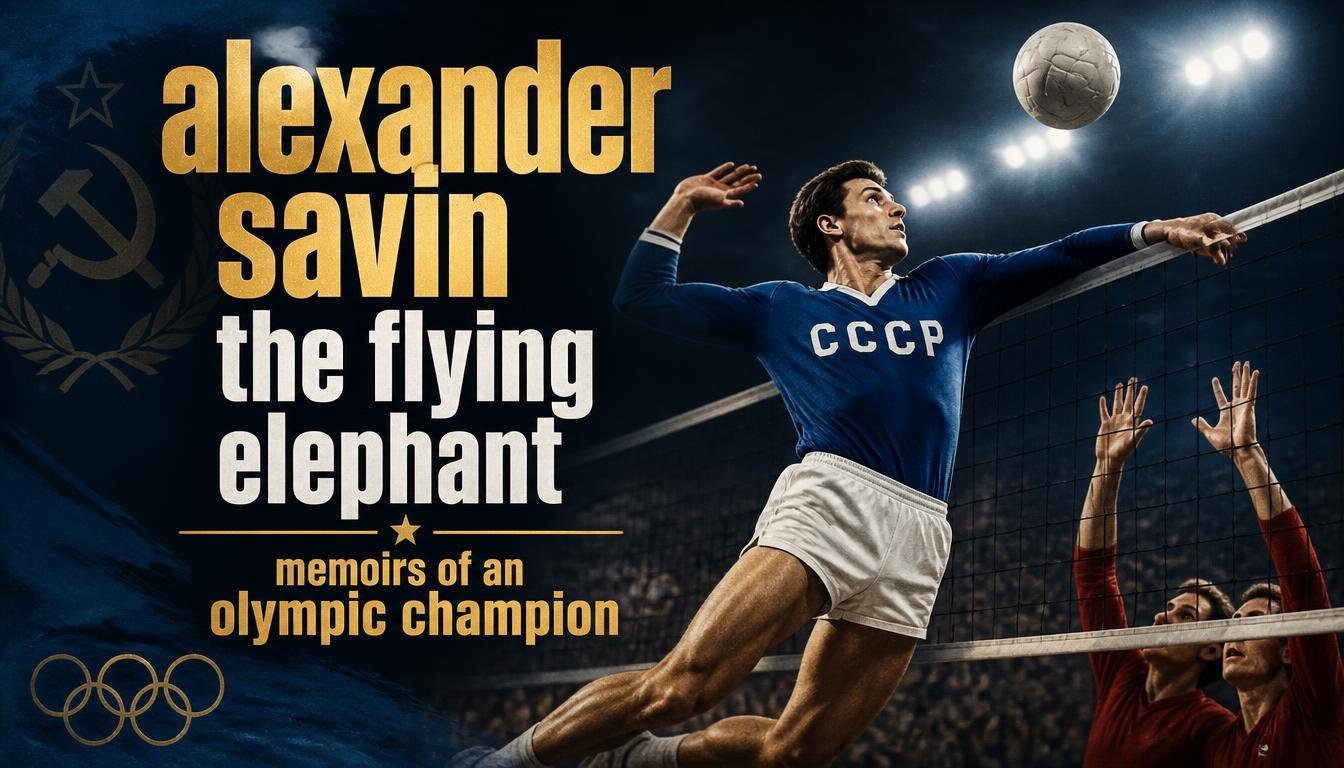
Alexander Savin The Flying Elephant Memoirs of an Olympic Champion is a fascinating topic for readers interested in Olympic volleyball, sports memoirs, and the life of an elite athlete. Alexander Savin competed for the Soviet Union at the 1976 and 1980 Olympic Games, experiencing both Olympic silver and gold. His story offers readers a closer look at competition, teamwork, discipline, and the journey behind an Olympic achievement.
Some sports stories are easy to remember because of one medal, one famous match, or one unforgettable moment. Others are more interesting because they show the long road behind the result. Alexander Savin belongs to the second group. His career connects Olympic volleyball, Soviet-era sport, international competition, teamwork, and the pressure of performing at the highest level.
Savin represented the Soviet Union at two Olympic Games. At Montreal in 1976, the Soviet men’s volleyball team won silver. Four years later, at the Moscow Olympics in 1980, the team won gold. Historical records also identify Savin as a participant in both Games and as a member of VC CSKA Moscow.
That background gives The Flying Elephant: Memoirs of an Olympic Champion a useful place in sports literature. A medal table can show what happened, but a memoir can help readers think about the athlete’s journey, the demands of competition, and the people and systems around elite sport.
This guide looks at Alexander Savin, The Flying Elephant, his Olympic journey, the themes connected with his story, and what readers can learn from it. It also takes a careful approach to book information because some current online pages make claims about the English edition, photographs, translation, and publication details that should be checked against the actual book listing or edition before being treated as definitive.
Who Is Alexander Savin?
Alexander Borisovich Savin is a former Soviet volleyball player who competed internationally during an important period in the development of men’s volleyball. He was born in 1957 and became associated with the Soviet national team and CSKA Moscow. His Olympic career is especially easy to understand because it contains both a silver-medal finish and a later gold-medal victory.
At the 1976 Montreal Olympics, the Soviet Union reached the men’s volleyball final but lost to Poland, finishing with the silver medal. A historical study of Olympic volleyball identifies Savin among the Soviet players appearing in that renewed team at Montreal.
The result was still a major achievement. However, the four-year period that followed gives Savin’s Olympic story an interesting shape. At the 1980 Moscow Olympics, the Soviet team won gold. In other words, his Olympic record was not simply a story of immediate victory. It included the experience of reaching the final, falling short, returning to the Games, and eventually winning the title.
That is one reason an athlete biography or memoir can be more interesting than a simple list of achievements. The numbers tell readers what happened. A personal sports story can help explain why those events mattered.
Savin’s career is also connected to the wider history of Soviet volleyball. During this era, the Soviet Union was one of the major powers in international men’s volleyball. Players trained within a highly organized sporting system and competed against strong national teams from Europe and elsewhere.
For modern readers, that historical setting matters. Volleyball today is not exactly the same game that Savin played. Training methods, tactics, sports science, media coverage, technology, and international competition have all changed. Reading about an earlier generation can therefore provide a useful comparison between different eras of elite sport.
Alexander Savin’s Olympic Record
The simplest way to understand Savin’s Olympic journey is through the two Games:
- 1976 Montreal: Olympic silver with the Soviet Union.
- 1980 Moscow: Olympic gold with the Soviet Union.
Savin’s participation in both Olympics is documented in historical records.
The progression from silver to gold is important because it creates a natural story about competition and resilience. Second place at an Olympic Games is an extraordinary achievement, but athletes often judge themselves by a much more demanding standard.
For a volleyball player, an Olympic tournament is also never an individual effort. A team must combine serving, passing, setting, attacking, blocking, defense, tactical planning, and communication. A player’s personal ability matters, but the result belongs to the whole group.
That makes Savin’s story especially useful for readers interested in teamwork and leadership, not only individual achievement.
What Is The Flying Elephant: Memoirs of an Olympic Champion?
The Flying Elephant: Memoirs of an Olympic Champion is presented online as a memoir connected with Alexander Savin’s volleyball career and Olympic experiences. Current coverage describes an English-language Kindle edition and presents the book as a sports memoir rather than a conventional biography written by an outside historian.
That distinction matters.
A biography normally has an outside writer researching and explaining another person’s life. A memoir is different because it centers on personal memory and experience. The reader is interested not only in the events themselves but also in how the athlete remembers them.
For a sports fan, that can change the reading experience.
Imagine two versions of the same Olympic final. A historical record might tell you the teams, score, medal result, venue, and date. A memoir can potentially add the human questions:
- What did preparation feel like?
- What did athletes think before an important match?
- How did teammates work together?
- What did losing feel like?
- What did winning change?
- What did life inside elite sport demand?
Those questions are part of the appeal of athlete memoirs.
Current third-party descriptions of the English edition also report a substantial length and a large collection of photographs, including archival and family material. However, edition details can vary, so readers should verify page count, photographs, format, and availability against the current retailer or publisher information before relying on those specifications.
What Readers Can Expect From the Book
Based on current descriptions, the memoir is positioned around several broad areas:
- Savin’s volleyball career
- Olympic competition
- Training and preparation
- Team experiences
- Soviet-era volleyball
- Personal reflections
- Challenges and achievement
- Life around elite competition
These themes make the book relevant to more than serious volleyball experts.
A reader who understands very little about volleyball can still understand the basic human story. An athlete works for years, enters major competitions, deals with pressure, experiences both success and disappointment, and eventually looks back at the journey.
That is a familiar pattern in sports memoirs.
The difference here is the historical setting.
Savin competed during a period when representing the Soviet Union carried a special political and cultural significance. The Moscow Olympics of 1980 were also affected by a major international boycott, with many Western countries absent from the Games. A historical study of Olympic volleyball notes the unusual political atmosphere surrounding the Moscow tournament.
That background gives modern readers another reason to approach the memoir as more than a simple motivational book.
It can be viewed as a sports story and as a personal window into a particular period of Olympic history.
Why Is It Called “The Flying Elephant”?
The title The Flying Elephant immediately creates curiosity.
An elephant suggests size, weight, strength, and stability. Flying suggests movement, lightness, freedom, and something that appears impossible. Put the two images together and the title creates a striking contrast.
Several current articles interpret the phrase as a metaphor for achieving something that appears unlikely or impossible.
However, there is an important difference between interpreting a title and confirming the author’s exact intended explanation.
Unless the book itself or a reliable author source explicitly explains the title, readers should not treat every online interpretation as a confirmed fact.
Still, the image works well when thinking about elite volleyball.
A powerful volleyball player is expected to be strong. But strength alone is not enough. A middle blocker needs timing, speed, jumping ability, anticipation, coordination, and tactical awareness. The visual contrast between something heavy and something airborne can therefore create a natural metaphor for the physical demands of the sport.
The title can also be understood more broadly.
An Olympic dream can look unrealistic when a young athlete first begins training. Years later, that same athlete may find themselves standing on an Olympic podium.
The lesson is not that every dream will automatically come true.
The more useful lesson is that large goals become possible through many smaller actions.
How to Use the “Flying Elephant” Idea in Real Life
Readers can turn that idea into a simple goal-setting exercise.
Step 1: Choose one large goal.
For example, a young volleyball player may want to make a national team.
Step 2: Break it into smaller targets.
Instead of focusing only on the final selection, the player can work on:
- jumping technique,
- blocking timing,
- serving consistency,
- defensive movement,
- strength,
- communication.
Step 3: Track progress.
A player can record training sessions, match performance, and areas that need improvement.
Step 4: Review setbacks.
A poor tournament does not have to become a final judgment. It can become information about what needs work.
Step 5: Repeat.
Elite performance is usually built through consistency rather than one dramatic moment.
That is a much more useful interpretation of the “flying” idea than simply telling readers to believe in themselves.
Alexander Savin’s Olympic Journey and Volleyball Legacy
Savin’s Olympic story becomes more meaningful when it is placed in the wider history of volleyball.
At Montreal in 1976, the Soviet Union won silver after losing the final to Poland. Historical volleyball research identifies Savin among the Soviet players at that tournament.
Four years later, the Soviet team won the gold medal at Moscow in 1980. Savin’s name appears among the Soviet Olympic volleyball competitors from this period.
The two results create an easy timeline:
| Olympic Games | Soviet result | Savin’s significance |
|---|---|---|
| Montreal 1976 | Silver | Part of the Soviet team that reached the Olympic final |
| Moscow 1980 | Gold | Part of the Soviet Olympic championship team |
This simple comparison shows why the phrase Olympic champion is important when discussing Savin. His career included the full emotional range of elite Olympic competition: reaching the final, losing, returning, and eventually winning.
The Moscow Games also need historical context. The 1980 Olympics took place during the Cold War, and the United States and a number of other countries boycotted the Games. That does not erase the sporting achievement, but it is part of the historical context readers should understand.
For volleyball fans, Savin’s career is also useful because it belongs to an earlier generation of the sport.
Today’s volleyball audience may be familiar with faster media coverage, professional leagues, advanced performance analysis, video review, sports nutrition, and detailed statistical tracking. Savin’s era operated in a very different environment.
That difference is exactly what makes historical sports memoirs valuable.
They preserve the experience of athletes who competed before today’s digital sports culture existed.
From Olympic Silver to Olympic Gold
The movement from 1976 to 1980 is perhaps the clearest practical lesson in Savin’s Olympic journey.
A silver medal can be viewed in two ways.
One approach is to see it as failure because gold was not achieved.
A healthier and more useful approach is to see it as both an achievement and a source of information.
The Soviet team had already reached the Olympic final. That meant the players were capable of competing at the highest level. The next challenge was understanding what separated them from the championship.
For athletes today, the same principle can be applied after a difficult competition.
Instead of asking only:
“Why did we lose?”
Ask:
- What did we do well?
- Where did we lose control?
- Which technical skills need improvement?
- Did communication break down?
- Did pressure affect decision-making?
- What should change before the next major event?
This turns disappointment into a training tool.
The value of Savin’s Olympic journey is therefore not simply that he eventually won gold. It is that his career provides a useful example of long-term development.
The Main Themes Readers Can Take From the Memoir
A good sports memoir should offer more than a medal list.
The most useful themes connected with Savin’s story are discipline, competition, teamwork, resilience, and the difference between public success and the private work required to reach it.
Current descriptions of The Flying Elephant repeatedly emphasize training, pressure, teamwork, personal development, and the human side of elite competition.
Discipline and Commitment
Olympic success is built long before the Olympic Games begin.
An athlete may spend thousands of hours practicing skills that spectators see for only a few seconds during competition.
For a volleyball player, this could mean repeating the same block movement, practicing serve reception, improving footwork, studying opponents, or developing timing with a setter.
That can feel boring.
But elite sport often depends on making basic skills reliable under pressure.
The practical lesson is simple: do not judge training only by how exciting it feels.
A useful training routine might include:
- one technical goal,
- one physical goal,
- one tactical goal,
- one mental goal.
At the end of the week, the athlete can review what improved and what did not.
That approach is more realistic than expecting motivation to appear every day.
Competition and Pressure
The Olympic Games are different from ordinary competition.
An athlete may spend years preparing for a tournament that lasts only a short time. The pressure can become enormous because the opportunity may not come again for four years.
This is where preparation matters.
Pressure cannot always be removed. It can be managed.
Athletes can prepare by:
- practicing match situations,
- creating routines before competition,
- focusing on controllable actions,
- avoiding unnecessary comparisons,
- using mistakes as information,
- communicating clearly with teammates.
The goal is not to become completely free from nerves.
The goal is to perform despite them.
Teamwork and Leadership
Volleyball makes teamwork impossible to ignore.
One player cannot win a full match alone. Every rally can involve several players performing different jobs.
A strong team needs trust.
A blocker must trust the defender behind them. A hitter must trust the setter. A setter must understand the attacker’s strengths. The coach must communicate a clear plan.
That makes Savin’s story useful for anyone interested in leadership.
Leadership is not always about giving speeches.
Sometimes leadership means:
- doing your role consistently,
- supporting teammates after mistakes,
- accepting coaching,
- communicating early,
- staying calm when others become nervous,
- putting team goals ahead of personal statistics.
These lessons apply well beyond sport.
Adversity and Building Resilience
Resilience is often misunderstood.
It does not mean never feeling disappointed.
It means being able to respond to disappointment without allowing it to end the journey.
The 1976 silver-medal result provides a natural example of this idea. Savin and the Soviet team had reached the Olympic final but did not win gold. Four years later, the Soviet team won in Moscow.
For everyday readers, the lesson can be applied to smaller setbacks.
A student may fail an exam.
A business owner may lose a customer.
An athlete may be left out of a starting lineup.
A writer may receive a rejection.
The useful question is not:
“Did I fail?”
It is:
“What can this result teach me before I try again?”
That shift turns adversity into a source of learning.
What Makes an Athlete Memoir Different From a Biography?
One of the biggest reasons to read a memoir is perspective.
A biography is usually built by someone studying another person’s life. A memoir is built around the person’s own memories and reflections.
Neither approach is automatically better.
They simply answer different questions.
A biography may be stronger for dates, external records, context, and independent analysis.
A memoir may be stronger for personal experience, emotion, relationships, memories, and the way events felt from inside the athlete’s life.
That is why readers should use both carefully.
If a memoir says an event happened in a certain way, that is valuable evidence of the author’s recollection. It should not automatically replace official competition records.
This distinction is especially important for historical sports writing.
A Simple Fact-Checking Method
If you are researching Alexander Savin or writing about The Flying Elephant, use this three-step check:
Check 1: Verify the achievement.
Use Olympic records or reputable historical sources for medals, participation, and tournament results.
Check 2: Verify the book detail.
For page count, publication date, edition, translator, format, and availability, check the actual book listing or publisher information.
Check 3: Separate interpretation from fact.
If an article says the title represents “impossible dreams,” ask whether that meaning comes from Savin himself or from the writer’s interpretation.
This method protects readers from a common problem with online sports content: repeating one site’s claim until it looks like an established fact.
Who Should Read The Flying Elephant: Memoirs of an Olympic Champion?
The book has a fairly broad potential audience.
Volleyball Fans
Volleyball readers have the strongest reason to explore Savin’s story.
His career belongs to an important period in international volleyball, and the Olympic connection gives fans a direct link to major events in the sport’s history.
Olympic Fans
Olympic readers may enjoy the book because it offers a different way to think about the Games.
Instead of seeing only medal tables and famous moments, readers can explore the athlete’s journey behind those results.
Biography and Memoir Readers
You do not need to be an expert in volleyball to understand the basic themes of an athlete’s life.
Ambition, discipline, competition, disappointment, teamwork, and resilience are universal subjects.
Young Athletes
Young players can use the story as a starting point for thinking about their own development.
The most useful approach is not to copy another athlete’s career.
Instead, ask:
What habits helped this athlete reach a high level, and which of those habits can I apply to my own situation?
Sports Historians
The memoir can also be interesting as a historical source.
Savin competed during a very different sporting and political period. That makes his perspective potentially useful for readers studying Soviet volleyball and Olympic history.
Why Alexander Savin’s Story Still Matters Today
Sports change quickly.
Players become faster. Training becomes more scientific. Equipment changes. Coaching methods evolve. Match analysis becomes more detailed.
Yet some parts of athletic development remain remarkably stable.
Athletes still need discipline.
Teams still need trust.
Competitors still experience pressure.
Setbacks still happen.
And winning still requires preparation.
That is why older sports stories can remain relevant.
Savin’s career also gives modern readers a chance to look at an Olympic era from the inside. The 1970s and 1980s were a major period for international volleyball, and Soviet teams were central to that history.
His Olympic record provides a particularly clear example of long-term achievement: silver in Montreal in 1976 followed by gold in Moscow in 1980.
The value of The Flying Elephant therefore goes beyond asking whether Savin was a successful player.
The better question is:
What can his experience tell us about the work, pressure, teamwork, and persistence behind elite performance?
That is where a sports memoir becomes more than a historical document.
It becomes a learning tool.
5 FAQs
1. Who is Alexander Savin?
Alexander Savin is a former Soviet volleyball player who competed at the 1976 and 1980 Olympic Games, winning silver in 1976 and gold in 1980.
2. What is The Flying Elephant: Memoirs of an Olympic Champion?
It is a memoir associated with Alexander Savin that explores his volleyball career, Olympic experiences, competition, and life as an elite athlete.
3. What did Alexander Savin achieve at the Olympics?
Savin was part of the Soviet men’s volleyball team that won an Olympic silver medal at Montreal in 1976 and gold at Moscow in 1980.
4. Why is the book called The Flying Elephant?
The title has been interpreted as a contrast between strength and the ability to achieve something extraordinary. A specific author-confirmed meaning should be verified from the book itself.
5. Is The Flying Elephant suitable for non-volleyball fans?
Yes. Along with volleyball history, the memoir’s broader themes of teamwork, discipline, competition, resilience, and Olympic achievement can interest general sports and biography readers.
Conclusion
Alexander Savin: The Flying Elephant Memoirs of an Olympic Champion is an interesting subject because it brings together two different sides of sports history. One side is measurable: Olympic appearances, medals, teams, tournaments, and career achievements. The other side is human: preparation, pressure, disappointment, teamwork, ambition, and the long process of becoming an elite athlete.
Savin’s Olympic journey provides a particularly strong example. He was part of the Soviet team that won silver in Montreal in 1976 and later gold in Moscow in 1980. That progression gives readers more than a simple success story. It shows why setbacks can become part of a larger career rather than the end of it.
For volleyball fans, the story offers historical value. For Olympic fans, it provides another perspective on elite competition. For memoir readers, it offers a chance to look beyond the medal ceremony and think about the person behind the achievement.
The most useful lesson is simple: great results are usually built long before anyone sees them. Whether the subject is volleyball, education, business, or another goal, discipline, teamwork, preparation, and the ability to learn from setbacks remain valuable. That is what makes Savin’s story worth exploring beyond the statistics.