

Introduction
Home improvement projects can start with something as simple as a loose cabinet handle, a damaged fence, or a room that needs fresh paint. They can also grow into much larger jobs involving flooring, appliances, electrical supplies, building materials, or outdoor upgrades. For homeowners, DIYers, contractors, and everyday shoppers in the United States, Home Depot is one of the major places to find products and services for these different needs.
The challenge is not always finding a store. The harder part is knowing what to buy, whether you should rent or purchase a tool, how to check local stock, when a service is useful, and how to avoid unnecessary spending. A smart shopping plan can save both money and time.
Home Depot offers a wide range of products, including appliances, hardware, tools, building materials, flooring, cabinets, garden supplies, furniture, home decor, and more. Depending on the location, shoppers can also find rental centers, installation services, workshops, pickup options, delivery, and other project-related services.
This guide explains how to use those options more effectively. Instead of simply listing products, it focuses on practical decisions: how to plan a project, what to check before buying, when renting makes sense, how to look for savings, and what to know about store information and returns.
What Can You Buy at Home Depot?
One of the biggest advantages of a large home-improvement retailer is having many types of products available in one place. You may begin with a small repair and discover that you need several related items. Planning the complete list before shopping can prevent repeated trips.
The exact products and stock available can differ by store, so it is useful to check the local store or online listing before traveling. Home Depot’s store locator also provides information about individual locations and their available services.
Building Materials and Hardware
Building materials are important for everything from basic repairs to major construction projects. Depending on your project, you may need cement, bricks, drywall, lumber, hardware, grout, or other construction supplies.
Hardware is another broad category. It can include fasteners, door hardware, fixtures, and other small components that are easy to overlook when making a project list.
For example, imagine you are replacing an interior door. Buying the door itself is only part of the job. You may also need hinges, door hardware, a handle or lock, screws, a measuring tool, and finishing materials. Making a complete list before shopping helps you avoid discovering halfway through the project that one small part is missing.
The same idea applies to fencing. A fence project may involve posts, gates, fasteners, concrete, tools, protective gloves, and finishing materials. Thinking about the project as a whole is more useful than searching for one product at a time.
Tools for DIY and Construction
Tools are another major part of home improvement shopping. Hand tools such as hammers and screwdrivers are useful for everyday repairs, while drills, circular saws, construction tools, and automotive tools are better suited to more specialized jobs.
If you are building a simple shelf, for example, you may need a drill, screws, a level, measuring equipment, and a suitable saw. For a larger carpentry project, the list may expand considerably.
Before buying a tool, ask yourself three questions:
- How often will I use it?
- Is this tool suitable for the material and job?
- Would renting it make more sense?
A homeowner who completes several projects each year may benefit from owning useful hand tools and a basic drill. A person who needs a specialized tool for one weekend may be better off considering a rental.
Also remember safety equipment. Gloves, eye protection, appropriate clothing, and other protective items can be just as important as the main tool.
Home, Kitchen and Bathroom Products
Home improvement is not limited to construction. Many projects involve making a room more useful, comfortable, or attractive.
Common categories include appliances, cabinets, flooring, faucets, bathroom fixtures, blinds, drapes, ceiling fans, furniture, and home decor.
A kitchen update is a good example. A homeowner might replace cabinets, improve lighting, install a new faucet, update flooring, and replace an appliance. These decisions are connected, so it helps to consider measurements, colors, finishes, electrical requirements, and installation needs before ordering.
Bathroom projects require similar planning. A new faucet may look attractive, but it still needs to match the existing plumbing setup. A bathroom fixture may have specific size or installation requirements. Measuring the available space before shopping can prevent an expensive mistake.
Outdoor and Garden Supplies
Outdoor projects can involve gardening tools, garden supplies, hoses, dirt and mulch, artificial grass, decking, fencing, gates, decorative stones, fire pits, and grills.
For a simple garden improvement, you might need soil or mulch, a hose, gardening tools, gloves, and plants. A larger backyard project could require decking, fencing, exterior lighting, or outdoor furniture.
Before purchasing outdoor materials, check the size of your space and estimate quantities. Buying too little can create delays, while buying too much may leave you with materials you do not need.
Weather should also be considered. Paint, wood, landscaping materials, and certain outdoor installations can be affected by local conditions. A good project plan accounts for both the material and the environment where it will be used.
Home Depot for Home Improvement Projects
Shopping is easier when you start with a project instead of a product. Rather than walking into a store and deciding what looks useful, first define what you want to accomplish.
For example, “I want to improve my bathroom” is too broad. A better plan might be “I want to replace the bathroom faucet, update the vanity area, and install new flooring.”
Once the goal is clear, create a materials list.
Start by measuring the space. Write down dimensions for walls, floors, cabinets, doors, windows, or any other areas affected by the project. Then identify the products and tools needed.
For a flooring project, for example, your list might include the flooring itself, underlayment if required, installation materials, transition pieces, measuring tools, and safety equipment. The exact requirements depend on the flooring type and installation method.
For a painting project, you might need exterior paint or interior paint, brushes, rollers, trays, tape, drop cloths, surface preparation supplies, and cleaning materials.
The goal is to think through the complete job before spending money.
Another useful step is to separate your budget into three groups:
- Materials: The products that become part of the project.
- Tools: Equipment you already own or may need to purchase or rent.
- Services: Installation, delivery, or other professional help.
This makes it easier to see where your money is going.
Planning a Kitchen or Bathroom Project
Kitchen and bathroom projects often involve several products working together. Cabinets, flooring, faucets, appliances, fixtures, lighting, and hardware can all affect one another.
Start with measurements and a basic layout. Think about where plumbing and electrical connections are located before selecting products. If the project involves major structural, plumbing, or electrical work, consider whether you need a qualified professional.
For example, buying a new dishwasher is not simply a matter of choosing the model you like. You need to check the available space, connection requirements, door clearance, and delivery or installation arrangements.
The same principle applies to cabinets. Measure the area carefully and think about how doors and drawers will open. A cabinet that fits the wall but blocks another fixture is not a successful purchase.
Planning Outdoor and Repair Projects
Outdoor projects benefit from the same approach.
Suppose you want to build a small fence. Start by measuring the fence line. Then determine the number of posts, panels, gates, fasteners, and other materials required. Check the ground conditions and local requirements before beginning.
For a smaller repair, the planning process can be much faster. Identify the damaged part, determine why it failed, and make sure the replacement is compatible.
A common mistake is replacing a damaged component without addressing the reason it failed. If a fixture repeatedly becomes loose, for example, simply buying another fixture may not solve the underlying problem.
Home Depot Tool and Equipment Rentals
Buying every tool for every project can become expensive. It can also leave homeowners with equipment that sits unused for most of the year. That’s where rental services can be useful.
Home Depot’s Rental Center offers equipment, tools, trucks, and trailer rentals, although availability and services can vary by location. Some rental tools and vehicles can be reserved online, while larger equipment may have separate arrangements.
When Should You Rent a Tool?
Renting is worth considering when:
- You need a specialized tool for one project.
- The tool is expensive to purchase.
- You do not have enough storage space.
- You are unsure how often you will use it.
- The project requires equipment that you would not normally keep at home.
Imagine you are removing old flooring and need a specialized piece of equipment for a short period. Buying an expensive tool for one job may not be practical.
On the other hand, if you regularly complete DIY projects and use a drill, circular saw, or other basic equipment several times a year, purchasing may make more sense.
How to Prepare for a Rental
Do not wait until the morning of your project to find out whether the equipment is available.
First, identify the exact tool or equipment you need. Then check the local rental center and availability. Ask about the rental period, required identification, terms, and any equipment-specific requirements.
For larger rentals, also think about transportation. A piece of equipment that fits your project may not fit your vehicle.
Home Depot rental pages also show different truck options at some locations, including cargo vans and flatbed trucks. Availability varies by store.
If you are renting a truck, estimate the total time needed rather than guessing. Include loading, driving, unloading, and returning the vehicle.
How to Save Money at Home Depot
Saving money on home improvement does not always mean finding the lowest sticker price. The better goal is to reduce the total cost of completing the project.
Start by comparing similar products. Two items may look almost identical but have different specifications, warranties, materials, or installation requirements.
Next, calculate how much material you actually need. Buying significantly more than necessary can waste money, while buying too little can create additional trips and shipping costs.
Check current promotions, coupons, and eligible offers before completing a purchase. Promotions change over time, so do not assume an offer you saw previously is still available.
A promo code should also be checked against the terms. Some offers may apply only to certain products, minimum purchase amounts, or specific periods.
Think About the Complete Project Cost
Suppose a homeowner sees an inexpensive flooring product. The product price may look attractive, but the project could also require underlayment, adhesive, trim, transition pieces, tools, and delivery.
A slightly more expensive product might sometimes be the better value if it reduces additional material or installation requirements.
The same principle applies to appliances. Energy-efficient appliances can sometimes have a higher purchase price but may offer potential operating-cost benefits over time. Compare the product’s specifications and expected use instead of judging only by the initial price.
Consider the Home Depot Credit Card Carefully
The Home Depot credit card may be relevant to shoppers who make larger purchases, but a financing offer should never be treated as automatic savings.
Before using a store credit card, read the current terms, promotional period, interest rules, fees, and payment requirements. Make sure the payment schedule fits your budget.
The same advice applies to any financing offer: focus on the total amount you will pay, not just the monthly payment.
Home Depot Stores, Online Shopping and Customer Services
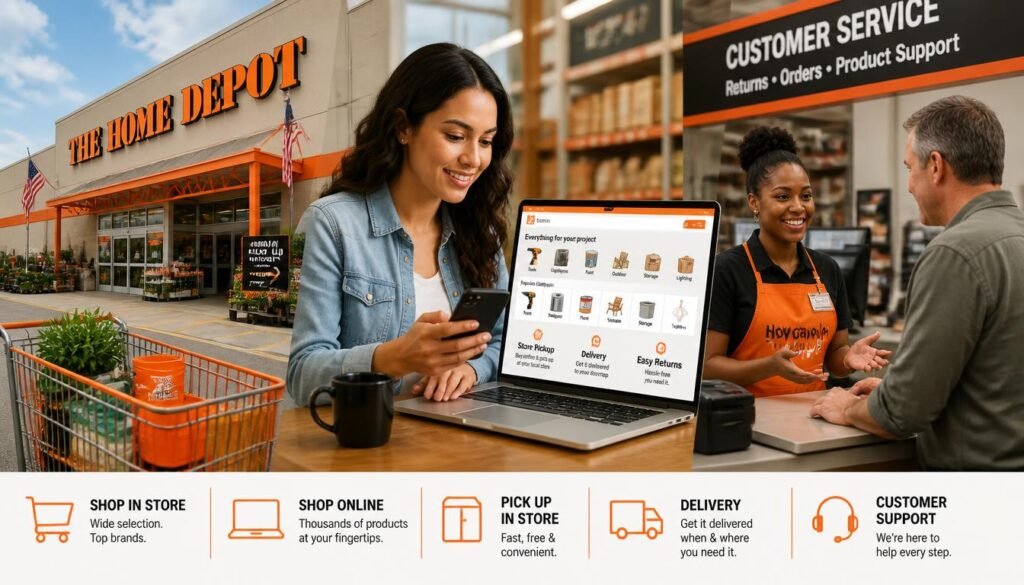
A useful shopping experience starts before you leave home.
If you search for Home Depot near me, the most important result is not simply the closest store. You should also check whether that location has the products or services you need.
Home Depot’s store locator allows shoppers to search by ZIP code, city, state, or store number. Store pages can show local hours and services such as rental centers and Pro Service Desks.
Finding a Store and Checking Hours
Store hours can vary by location and may also change around holidays or special circumstances. Instead of relying on an old search result, check the specific store before traveling.
This is especially important if you need a service department, rental center, or early-morning pickup.
A smart routine is:
- Search for your local store.
- Confirm the address.
- Check current hours.
- Check whether the service you need is available.
- Check product stock.
- Place an order or reserve equipment if appropriate.
This can turn a frustrating trip into a much smoother one.
Checking Stock Before You Go
“Home Depot stock” is an important consideration when you need a particular product quickly.
Online availability can help you determine whether an item is available at a selected store. Home Depot also promotes tools for seeing what’s in stock and finding products in a store.
Still, availability can change. If the project is time-sensitive, confirm the details before leaving.
This is especially useful for large materials, appliances, rental equipment, or products that are not needed regularly.
Pickup and Delivery
Store pickup can be convenient for smaller purchases when you want to avoid spending time searching through aisles.
Delivery may make more sense for bulky products or large quantities of materials. Home Depot’s store pages currently promote both delivery and in-store pickup options, although eligibility and availability can vary.
Think about the physical size and weight of your purchase. A large quantity of flooring, lumber, appliances, or other heavy materials may be much easier to have delivered than to transport yourself.
Customer Service
Customer service can help when an order, return, delivery, or product issue becomes complicated.
Before contacting support, gather your order information, receipt, product details, and a short description of the problem. Having those details ready can make the conversation faster.
If the issue concerns a major appliance or delivery damage, act quickly because special rules may apply.
Home Depot Return Policy: What Shoppers Should Know
A return policy is something shoppers should check before they need it.
Home Depot’s current policy states that most merchandise can be returned within 90 days with proof of purchase, but there are important exceptions. Some categories have 30-day, 7-day, or 48-hour return periods.
Major appliances are especially important. The current policy states that customers should contact Customer Solutions within 48 hours of delivery for damage or defects involving major appliances, and special rules apply to returns in that category.
Some purchases made using certain Home Depot credit accounts may qualify for a longer return period, but exceptions still apply.
Because policies can change and different products have different rules, always check the current policy for the exact item you purchased.
How to Make a Return Easier
Keep your receipt or other proof of purchase. Do not throw away packaging immediately when you buy a product that you may need to inspect or test.
For online orders, keep the order information available.
Before returning an item, check:
- Is the item within the applicable return period?
- Is proof of purchase available?
- Is the product unused or in the required condition?
- Does the product belong to a category with special rules?
- Does it need to be returned in-store rather than by mail?
The official policy also notes that certain products cannot be returned through the mail because of safety concerns, including some items involving flammable liquids or gases.
The safest approach is simple: check the current policy before buying and again before returning.
Extra Home Depot Services Worth Knowing
A large home-improvement retailer can provide more than products.
Home Depot store pages currently highlight free workshops and classes, rental centers, installation services, delivery, and pickup.
Workshops can be useful for people who are new to DIY. Instead of trying to learn everything from trial and error, a homeowner can look for educational resources related to a project.
Kids workshops can also introduce younger family members to basic building and DIY activities in an appropriate setting. Availability and schedules depend on the location and current program.
Installation services may be useful when a project involves a product that needs professional installation. This can be especially relevant for homeowners who are comfortable choosing products but do not want to handle the installation themselves.
Other useful areas can include moving supplies, home security products, emergency kits, cleaning supplies, filters, and seasonal products.
The important point is not to use every service simply because it exists. Choose the option that solves a real problem in your project.
Home Depot Careers and Jobs
Not everyone searching for Home Depot information is looking to buy something. Some visitors may be interested in Home Depot careers or jobs.
Job seekers should use official company career information when looking for current openings, job requirements, application instructions, and employment details. Job availability can change frequently, so old third-party listings may not accurately represent current opportunities.
Potential employees should also distinguish between general store roles and specialized positions. Some locations may have opportunities connected to sales, operations, customer service, logistics, professional services, or management.
If you are applying for a position, prepare a clear resume and review the requirements of the specific role rather than submitting the same application without changes.
5 FAQ Questions
1. What can you buy at Home Depot?
Home Depot offers products such as appliances, tools, hardware, building materials, flooring, cabinets, garden supplies, furniture, and home decor.
2. Does Home Depot rent tools and equipment?
Yes. Participating Home Depot locations offer tool and equipment rentals, with availability and rental options varying by store.
3. How can I find a Home Depot near me?
Use the Home Depot store locator to find nearby locations, check store hours, and review available services.
4. What is the Home Depot return policy?
Most merchandise currently has a 90-day return period with proof of purchase, but some products have different rules and shorter return windows.
5. Does Home Depot offer delivery and store pickup?
Yes. Home Depot offers delivery and pickup options for eligible products, although availability and timing can vary by location and item.
Conclusion
Home Depot can be useful for much more than a quick trip to buy a hammer or a box of screws. Homeowners can use it for repairs, renovations, appliances, flooring, cabinets, gardening, outdoor projects, and everyday maintenance. DIYers can find tools, building materials, and educational resources, while contractors may benefit from professional-focused services and project supplies.
The smartest way to shop is to start with the project rather than the product. Measure the space, create a complete materials list, set a realistic budget, compare products, and check local availability before traveling. If you only need specialized equipment once, investigate rental options instead of automatically buying it.
Finally, always verify current store hours, stock, rental availability, promotions, and return rules before making an important purchase. With a little planning, you can spend less time solving shopping problems and more time getting the actual home-improvement project done.