

Introduction
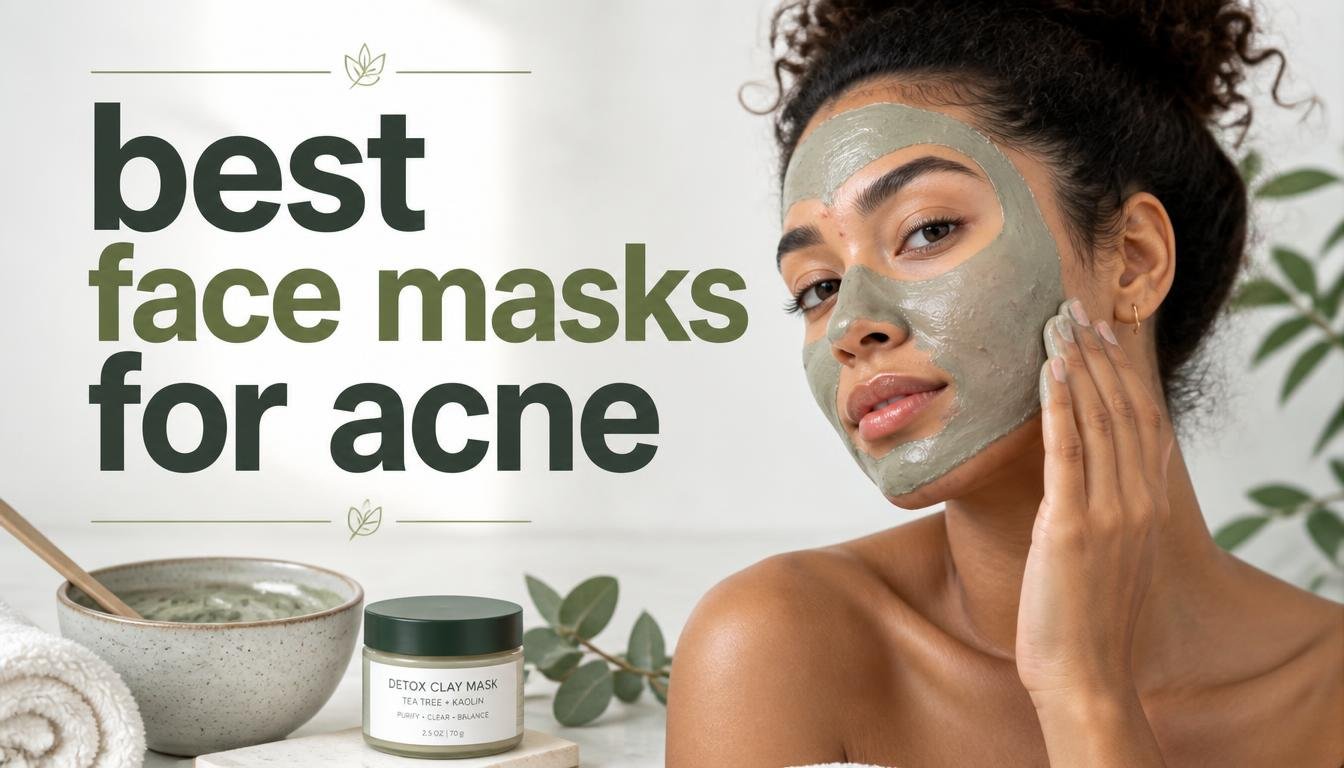
Finding the best face masks for acne can be harder than it sounds. One product may work well for oily skin but leave sensitive skin feeling dry. Another may promise to clean pores but contain ingredients that cause irritation when used too often.
The good news is that you do not need the strongest mask to get useful results. The better approach is to choose a formula based on your skin type, the kind of breakouts you experience, and the ingredients it contains.
For example, clay can be useful when excess oil is the main concern, while salicylic acid is commonly used to help unclog pores. Hydrating ingredients can also be valuable when acne-prone skin becomes dry or irritated. The American Academy of Dermatology (AAD) notes that facial masks can complement a skincare routine when the ingredients match the person’s skin concerns, but they should not replace appropriate acne treatment.
This guide looks at 10 useful types of acne face masks and explains what each one is best suited for. It also covers how to choose a mask for oily, sensitive, or combination skin, which ingredients are worth looking for, how often to use a mask, and when a dermatologist may be a better option.
Best Face Masks for Acne at a Glance
Before choosing a product, it helps to understand what each type of mask is actually designed to do.
| Mask type | Best for | Ingredients to look for | Main benefit |
|---|---|---|---|
| Clay mask | Oily skin | Kaolin, bentonite | Helps absorb excess oil |
| Salicylic acid mask | Clogged pores | Salicylic acid | Helps exfoliate and unclog pores |
| Sulfur mask | Breakout-prone skin | Sulfur | Supports acne-focused skincare |
| Niacinamide mask | Oily or combination skin | Niacinamide | Supports oil control and skin comfort |
| Charcoal mask | Oily skin | Charcoal, clay | Helps remove surface oil |
| Hydrating mask | Dry, acne-prone skin | Aloe, glycerin, hyaluronic acid | Adds hydration |
| Gentle exfoliating mask | Dull or congested skin | Lactic or glycolic acid | Provides exfoliation |
| Fragrance-free mask | Sensitive skin | Gentle, simple formula | Reduces exposure to common irritants |
| Pore-focused mask | Blackheads | Salicylic acid, clay | Targets clogged-looking pores |
| Multi-purpose mask | Combination skin | Balanced ingredients | Allows targeted skincare |
The important point is that there is no single mask that is perfect for everyone. A person with very oily skin may prefer a clay-based formula, while someone with sensitive acne-prone skin may need a much simpler, hydrating product.
10 Best Face Masks for Acne
1. Best Overall Face Mask for Acne
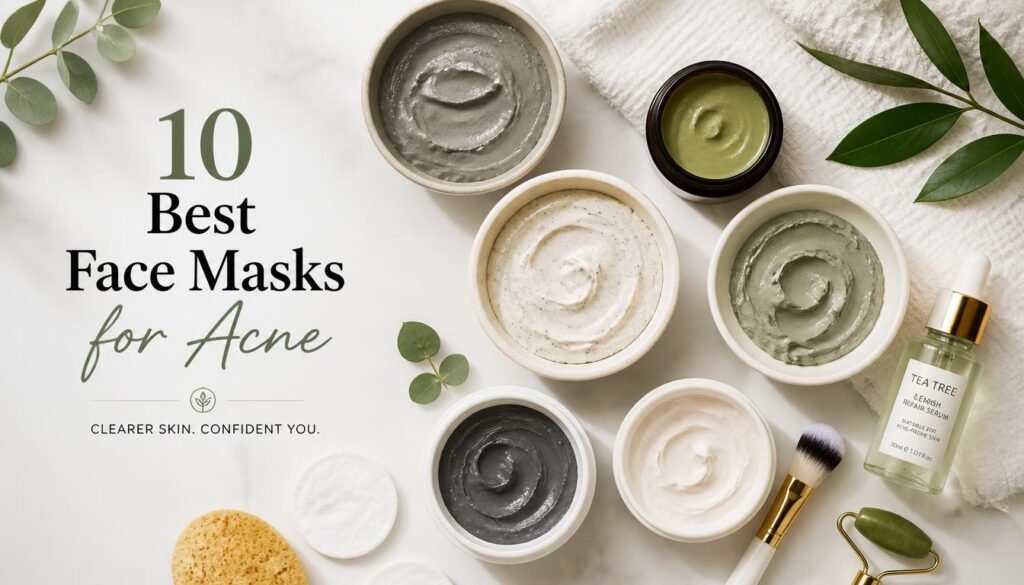
For an overall acne-focused option, look for a mask that provides some pore or oil support without making the skin extremely dry.
A good formula may contain an ingredient such as salicylic acid, clay, niacinamide, or a combination of acne-friendly ingredients. The goal is not to find a product with the longest ingredient list. It is to find one that fits into the rest of the skincare routine.
For example, if a person already uses a salicylic acid cleanser every day, choosing another very strong exfoliating mask may be unnecessary. A gentler clay or hydrating mask may make more sense.
Best for: People who want a balanced addition to an acne-friendly routine.
Look for: Salicylic acid, clay, niacinamide, or gentle hydrating ingredients.
Watch out for: Multiple strong active ingredients in the same routine.
A mask can support skincare, but persistent acne generally needs a more consistent treatment approach. The AAD lists topical treatments such as benzoyl peroxide, retinoids, salicylic acid, and azelaic acid among established acne treatment options.
2. Best Face Mask for Oily Acne-Prone Skin
If your face becomes shiny quickly, especially around the forehead, nose, and chin, a clay-based mask may be worth considering.
Kaolin clay and bentonite clay are common choices for oil-focused skincare. They can absorb some surface oil, which can make the skin look less shiny after use.
However, oily skin still needs hydration. Trying to remove every trace of oil can leave the skin uncomfortable and dry. That can make a skincare routine harder to maintain.
A better approach is to use an oil-control mask occasionally and follow it with a lightweight, non-comedogenic moisturizer.
Best for: Oily skin with excess shine and occasional clogged pores.
Practical tip: If your cheeks are normal or dry but your T-zone is oily, apply the mask mainly to the forehead, nose, and chin instead of covering the entire face.
3. Best Face Mask for Sensitive Acne-Prone Skin
Sensitive skin needs a different strategy. A mask that feels refreshing on oily skin can be too aggressive for someone who experiences redness, burning, or tightness.
For sensitive acne-prone skin, look for a short and simple ingredient list. Fragrance-free formulas can be a sensible choice if fragrance tends to irritate your skin.
Hydrating ingredients such as aloe vera, glycerin, and hyaluronic acid may also make a mask more comfortable.
Avoid the temptation to combine a strong exfoliating mask with several other active acne products on the same day.
Best for: Sensitive, easily irritated, or dry acne-prone skin.
Check before using: Look for fragrance, essential oils, harsh scrubs, and multiple exfoliating acids.
The AAD warns that irritating masks can lead to dryness and irritation and recommends following product directions and stopping use if a mask causes itching, burning, or stinging.
4. Best Face Mask for Blackheads and Clogged Pores
Blackheads and whiteheads develop when pores become clogged with oil and dead skin cells. A blackhead is not simply dirt sitting on the skin, so aggressive scrubbing is not the answer.
For clogged pores, salicylic acid is one of the most useful ingredients to understand. It is a beta hydroxy acid, or BHA, and is commonly used to help exfoliate the skin and unclog pores.
A salicylic acid face mask can therefore make sense as part of a pore-focused routine.
Still, more is not better. If your cleanser, toner, serum, and mask all contain exfoliating acids, your skin may become irritated.
Best for: Blackheads, whiteheads, and congested-looking pores.
Look for: Salicylic acid and other gentle pore-focused ingredients.
Avoid: Scrubbing blackheads aggressively or trying to squeeze them out immediately after using a mask.
5. Best Clay Mask for Acne
Clay masks remain popular because they are simple and particularly useful for oily skin.
Kaolin clay is generally considered a gentler clay option, while bentonite clay is often selected for stronger oil-absorbing properties. The right choice depends on how oily and sensitive your skin is.
A common mistake is waiting until the clay becomes extremely hard and cracked before washing it off. That is not necessary.
If your skin feels painfully tight afterward, the mask may be too drying or you may be using it too frequently.
Best for: Oily and combination skin.
How to use it better:
- Start with clean, dry skin unless the product says otherwise.
- Apply a thin, even layer.
- Avoid the delicate eye and lip areas.
- Follow the package instructions for timing.
- Rinse gently without scrubbing.
- Apply a lightweight moisturizer.
The goal is to control excess oil, not completely strip the skin.
6. Best Face Mask for Combination Skin
Combination skin can make acne skincare frustrating. The T-zone may be oily and congested while the cheeks feel normal or dry.
Instead of applying a strong mask everywhere, try targeted application.
For example, a person might use a clay mask on the forehead and nose while applying a gentle hydrating mask to the cheeks on another day.
This approach is sometimes called multi-masking. It is not necessary to buy several products, but it can help when different areas of the face have different needs.
Best for: Combination skin with an oily T-zone and drier cheeks.
Simple check: After washing your face, notice how your skin feels after about 20 to 30 minutes without applying skincare. If some areas become shiny while others feel tight, your skin may benefit from a more targeted approach.
7. Best Face Mask for Acne Scars and Dark Spots
This is an area where skincare marketing can become confusing.
Acne scars and post-acne dark spots are not the same thing.
Dark marks left behind after a pimple can gradually fade, while true acne scars can involve changes in the skin’s texture. A face mask should not be presented as a guaranteed way to erase deep or raised scars.
If dark spots are the main concern, ingredients such as azelaic acid can have a role in acne treatment and may also help with dark spots left after acne. However, that does not mean every mask containing an ingredient will produce the same result.
For a mask, focus on gentle formulas rather than aggressive “scar removal” claims.
Daily sun protection is also important when trying to improve the appearance of post-acne marks. A broad-spectrum sunscreen with SPF 30 or higher can help protect the skin from UV exposure.
Best for: People who want to support the appearance of post-acne marks while maintaining a gentle routine.
Do not expect: A face mask to repair deep acne scars overnight.
8. Best Gentle Face Mask for Occasional Breakouts
Not everyone has frequent acne. Some people experience a few pimples around stressful periods, hormonal changes, or other triggers.
In this situation, using an extremely aggressive mask may not be necessary.
A gentle mask can provide a little oil control or hydration while allowing the rest of the skincare routine to do the heavy lifting.
If you have one small pimple, you may actually get more value from a targeted acne treatment than from applying a strong mask to your entire face.
The AAD recommends ingredients such as benzoyl peroxide, salicylic acid, adapalene, or azelaic acid for different acne situations, depending on the type of breakout and treatment needs.
9. Best Affordable Face Mask for Acne
An affordable mask can work well if its formula matches your skin.
Price alone does not tell you whether a product is suitable. Instead, compare:
- Active ingredients
- Size of the container
- How often the product should be used
- Whether the formula irritates your skin
- Whether it fits with the rest of your routine
- Whether you actually need the product
For example, a $10 mask that causes irritation is not necessarily a better value than a $20 mask that you can comfortably use for several months.
If shopping at Walmart or another large retailer, read the current ingredient list and product directions rather than relying only on marketing claims.
10. Best Hydrating Face Mask for Acne-Prone Skin
Many people with acne assume hydration is the enemy because their skin already feels oily.
That is a mistake.
Acne treatments can cause dryness and irritation, and dermatologists may recommend moisturizer as part of an acne treatment routine. The AAD notes that ingredients such as benzoyl peroxide, salicylic acid, and retinoids can dry or irritate skin, making appropriate moisturizing useful.
A hydrating face mask may therefore be useful when acne-prone skin feels tight or uncomfortable.
Look for ingredients such as:
- Aloe vera
- Glycerin
- Hyaluronic acid
- Ceramides
Choose lightweight, non-comedogenic skincare when possible.
Best for: Acne-prone skin that is also dry, dehydrated, or irritated.
How to Choose the Best Face Mask for Your Skin Type
The best choice becomes much easier when you start with your skin instead of the product label.
If You Have Oily Skin
Look for ingredients that help manage excess oil, particularly clay.
Use the mask as a supporting step rather than trying to make your skin completely oil-free.
A simple routine could look like:
Morning: Gentle cleanser → lightweight moisturizer → sunscreen
Evening: Gentle cleanser → acne treatment if appropriate → moisturizer
Occasionally: Clay or pore-focused mask
This prevents the mask from becoming the entire acne strategy.
If You Have Sensitive Skin
Keep things simple.
Choose a fragrance-free formula when possible and avoid stacking several exfoliating products.
Before applying a new mask to your whole face, test a small amount according to the product’s directions. If you experience significant burning, itching, or redness, wash it off rather than trying to “push through” the reaction.
If You Have Combination Skin
Think in zones.
The forehead, nose, and chin may need more oil control than the cheeks. You can use a targeted clay mask on oily areas instead of drying out the entire face.
A gentle moisturizer can then be used on areas that feel dry.
If You Have Frequent Breakouts
A face mask should be viewed as an extra step, not your primary acne treatment.
If breakouts are persistent, consider whether your everyday routine contains an appropriate acne treatment. The AAD recommends evidence-based options such as topical benzoyl peroxide, retinoids, salicylic acid, and azelaic acid depending on the individual situation.
Best Ingredients to Look for in an Acne Face Mask
Salicylic Acid
Salicylic acid is one of the most relevant ingredients for clogged pores.
It helps exfoliate the skin and can help unclog pores. It is particularly relevant when blackheads and whiteheads are a major concern.
If you are new to salicylic acid, avoid introducing several salicylic acid products at once.
Clay
Clay is useful for people who mainly want oil absorption.
Kaolin and bentonite are two common types. Clay does not need to leave the skin painfully dry to be effective as part of an oil-control routine.
Sulfur
Sulfur is another ingredient found in acne-focused skincare.
It can be useful for some people with breakout-prone skin, but the formula and concentration matter. Sulfur products can also have a noticeable smell or cause dryness in some users.
If you have sensitive skin, start carefully.
Niacinamide
Niacinamide is popular because it can fit into routines for oily, combination, and sensitive skin.
It is often used in products designed to support the skin barrier and improve the appearance of uneven skin and excess oil.
A niacinamide mask can therefore be a gentler choice when the goal is not aggressive exfoliation.
Aloe, Glycerin, and Hyaluronic Acid
These ingredients are useful when the skin needs hydration.
Aloe can feel soothing, while glycerin and hyaluronic acid are commonly used as humectants that help attract and retain water.
Hydration is particularly useful if your acne routine already contains products that make your skin dry.
AHAs
Alpha hydroxy acids such as glycolic acid and lactic acid exfoliate the surface of the skin.
They may be useful for some skincare goals, but they should be introduced carefully if you already use acne treatments.
Do not assume that an AHA mask should be combined with every other active product. If your skin becomes irritated, simplify the routine.
How to Use a Face Mask for Acne Without Irritating Your Skin
How Often Should You Use an Acne Face Mask?
There is no universal number that works for every mask.
Start with the product’s directions. If your skin is sensitive or you are using other active ingredients, less frequent use may be more appropriate.
For example, someone using a strong acne treatment every night may not need an exfoliating mask several times per week.
Watch your skin rather than chasing a schedule.
If you notice:
- Increasing dryness
- Tightness
- Flaking
- Burning
- Redness
- New irritation
reduce or stop the mask.
How Long Should You Leave It On?
Follow the instructions on the product.
Leaving a mask on longer does not automatically make it more effective. This is especially important with exfoliating or clay-based formulas.
Set a timer if necessary. When the recommended time is finished, rinse gently with lukewarm water.
What to Apply After a Face Mask
After removing the mask, avoid immediately piling on several strong products.
A simple routine is often enough:
- Rinse the mask thoroughly.
- Pat the skin dry rather than rubbing.
- Apply a gentle moisturizer.
- During the daytime, use broad-spectrum sunscreen.
Moisturizer is especially important when acne treatments are already causing dryness. The AAD explains that keeping acne-prone skin moisturized can help reduce dryness and improve tolerance of treatments.
When to Wash It Off Immediately
Do not continue using a mask if your skin is clearly reacting badly.
Wash it off if you experience strong:
- Burning
- Stinging
- Itching
- Swelling
- Increasing redness
The AAD specifically recommends removing a mask if it causes itching, burning, or stinging.
What to Avoid in a Face Mask for Acne-Prone Skin
A good acne mask is not just about what it contains. It is also about what it avoids.
Heavy Fragrance
Fragrance is not automatically harmful to everyone, but sensitive skin may react to it. If your skin frequently becomes irritated, a fragrance-free product may be easier to tolerate.
Irritating Essential Oils
Essential oils can make a product smell appealing, but they are not necessary for effective acne skincare.
If your skin is sensitive, keeping the formula simple may be a better strategy.
Harsh Physical Scrubs
Do not use a gritty mask to aggressively scrub away blackheads.
Blackheads are caused by clogged pores, not dirt sitting on the surface. Scrubbing harder can irritate the skin rather than solving the underlying problem.
Too Many Exfoliating Actives
Using a salicylic acid mask, glycolic acid toner, strong acne treatment, and physical scrub together can be excessive.
Think about your complete routine rather than judging each product separately.
Overusing Clay
Clay can be useful for oily skin, but using it too frequently can leave the skin dry and uncomfortable.
If your face feels tight every time you rinse the mask away, reconsider the product or frequency.
Can Face Masks Actually Get Rid of Acne?
Face masks can help support an acne-friendly routine, but they should not be treated as a guaranteed cure for acne.
They may help with specific concerns such as:
- Excess surface oil
- Clogged-looking pores
- Mild congestion
- Temporary dryness or discomfort
- General skin maintenance
However, acne develops through several processes involving clogged pores, oil production, inflammation, and other factors. Different types of acne also respond to different treatments.
For example, a clay mask may absorb oil, but that does not mean it replaces a proven acne medication. Likewise, a hydrating mask can make dry skin feel more comfortable, but it does not necessarily treat the cause of persistent breakouts.
The AAD’s acne guidelines support established treatments including benzoyl peroxide, topical retinoids, salicylic acid, and azelaic acid, among other options.
So, think of a mask as one supporting tool, not the entire toolbox.
If you have deep, painful nodules or cysts, or acne that is leaving permanent scars, it is particularly important to seek professional care. The AAD notes that nodules and cysts can cause permanent scarring and often require a dermatologist’s help.
Five FAQ Questions
1. What is the best face mask for acne?
The best mask depends on your skin type and concern. Clay can suit oily skin, while salicylic acid may help with clogged pores and blackheads.
2. Are clay masks good for acne?
Clay masks can help absorb excess surface oil and may be useful for oily or combination skin. Avoid overusing them if your skin becomes dry or irritated.
3. Can face masks get rid of acne?
Face masks can support an acne-friendly skincare routine, but they should not be considered a complete acne treatment, especially for persistent or severe breakouts.
4. How often should you use a face mask for acne?
Follow the product’s directions and consider the rest of your skincare routine. Exfoliating or clay masks may cause irritation if used too frequently.
5. What is the best face mask for sensitive acne-prone skin?
A gentle, fragrance-free and hydrating formula may be a better choice for sensitive acne-prone skin. Patch testing a new product can also help reduce the risk of irritation.
Conclusion
The best face masks for acne are not necessarily the strongest or most expensive ones. The right choice depends on what your skin actually needs.
For oily skin, a clay mask may help manage excess surface oil. For clogged pores and blackheads, salicylic acid can be a useful ingredient. Sensitive skin may benefit more from a gentle, fragrance-free and hydrating formula. Combination skin often does best with targeted application instead of treating every part of the face in exactly the same way.
Most importantly, a face mask should be treated as a supporting step rather than a replacement for an effective acne routine. If breakouts are persistent, painful, deep, or causing scars, professional treatment can be much more valuable than adding another mask.
Start simple, introduce one new product at a time, follow the label, moisturize when needed, and pay attention to how your skin responds. That approach is far more useful than chasing the strongest product on the shelf.